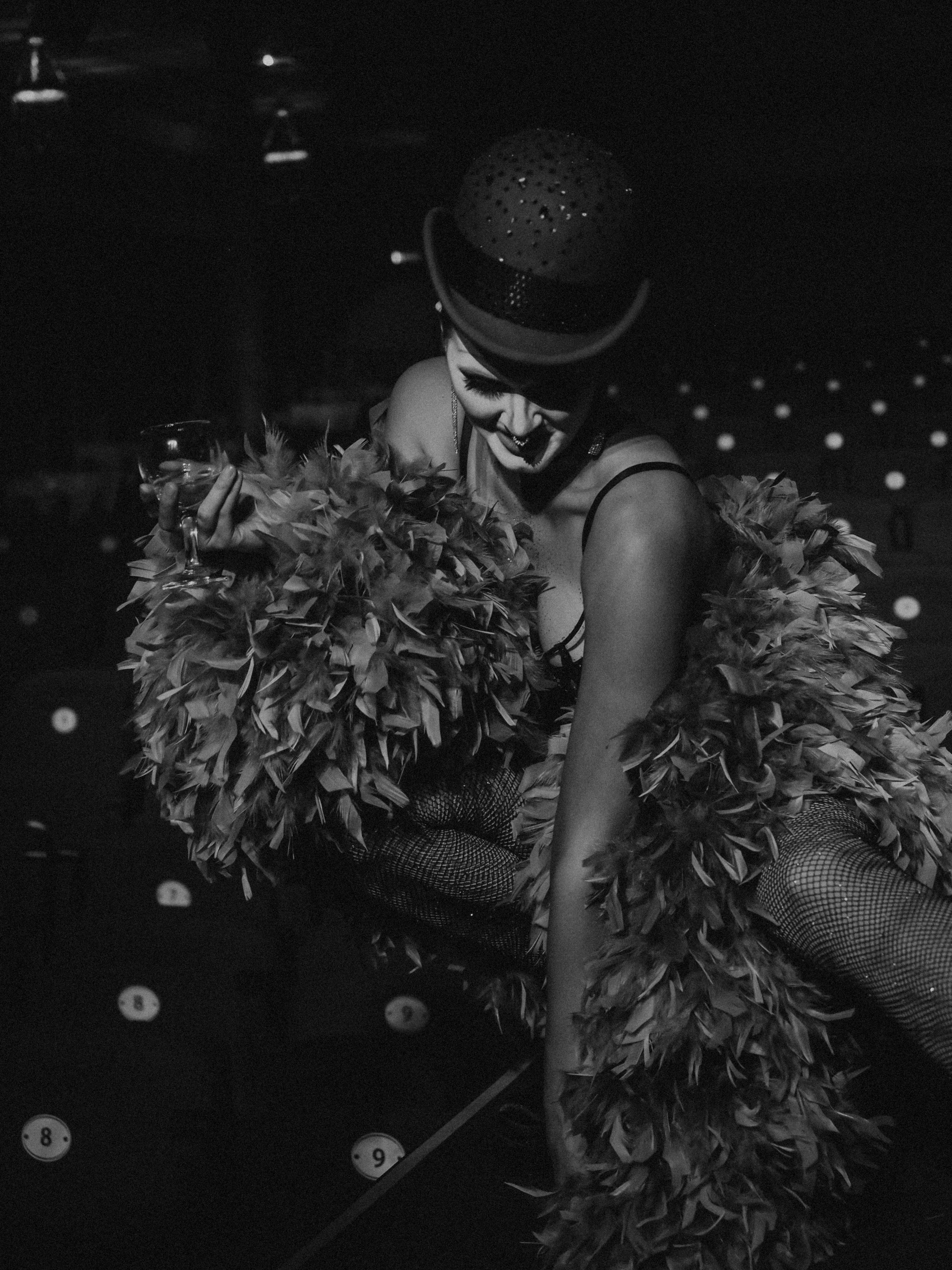
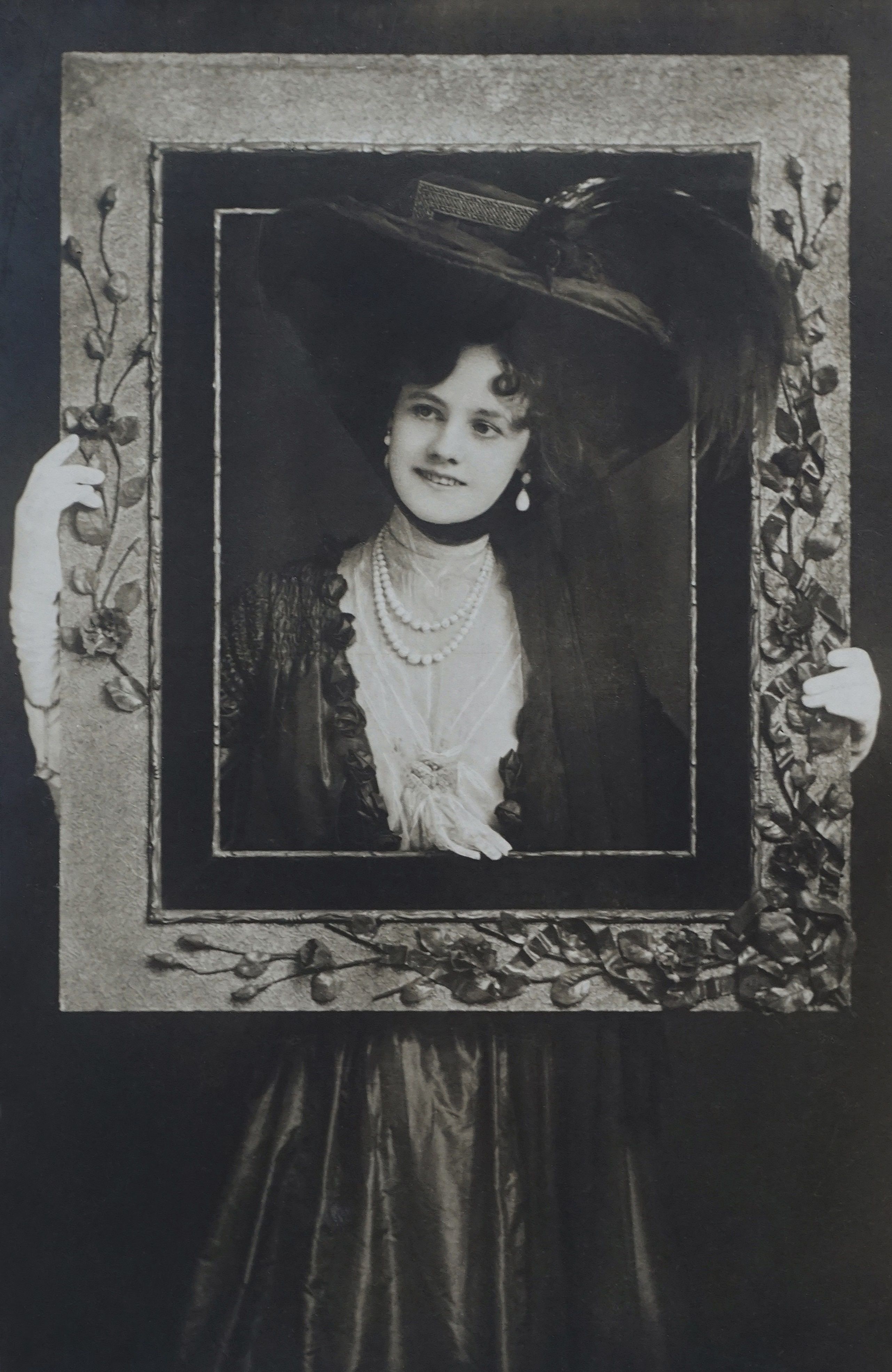
Look at a portrait like this one and you are looking at a solved mystery. The woman is gone, the men who paid for her pearls are gone, and the perfume she wore has long since evaporated – yet her face is still here, still catalogued, still argued over. That is the strange arithmetic of fame: some of history’s most famous courtesans have outlived every king, banker and minister who ever kept them.
Think of the names that survive. Phryne, tried before an Athenian jury in the fourth century BC. Ninon de l’Enclos, whose Paris salon ran for four decades. La Belle Otero, star of the Folies-Bergère. Mata Hari, executed by firing squad in 1917. Nobody today can name the financiers who funded their apartments, but the women themselves are still being written about, painted and turned into opera. That is not an accident of memory. It is the product of a very specific skill – and it had almost nothing to do with beauty.
What “courtesan” actually meant
Start with the word, because the word does half the explaining. Courtesan reached English in the 1540s from the French courtisane, borrowed from the Italian cortigiana – literally “woman of the court,” the feminine of cortigiano, a courtier. The verb to court, in the romantic sense, descends from the same root. In Renaissance Italy the label produced the cortigiana onesta, the “honest courtesan,” who was explicitly cast as an intellectual: a trained conversationalist, musician and poet who moved among the powerful.
The term always carried education, access and presentation inside it. That is what separated a courtesan from a common prostitute in the societies that used the word, and it is the first reason the most famous ones became icons: they were performers of a kind of cultivated self, in an age when that was nearly the only public career a woman could own.
The first cultural icon: Phryne
The pattern shows up fully formed in fourth-century Athens. Phryne, daughter of Epicles, born in the Boeotian town of Thespiae, was the most celebrated hetaera of her generation – a “companion,” in the Greek term, trained for the symposium rather than the street. According to the ancient sources she was so wealthy that she reportedly offered to rebuild the walls of Thebes at her own expense if she could inscribe on them: “Alexander destroyed them, but Phryne the hetaera rebuilt them.”
More consequential: she was said to be the model for Praxiteles’ Aphrodite of Knidos, the first monumental nude female figure in Greek art, and for Apelles’ Aphrodite Anadyomene. Her home town had a gilded statue of her erected at Delphi, set between images of a Spartan king and Philip of Macedon. Whether the model claims are true or just the gossip of Athenaeus and later writers, the effect was real: a courtesan stood at the origin of Western art’s most famous image of a goddess.
Then there is the trial. Prosecuted for impiety around 350–340 BC by a rejected lover, defended by the orator Hypereides, she was acquitted after her breasts were exposed to the jury – Quintilian’s verdict was that she was saved “not by Hypereides’ pleading, but by the sight of her body.” A 2025 scholarly review of the biography Phryne: A Life in Fragments argues the courtroom moment was almost certainly invented by a later writer, since none of the comedies written in her own lifetime mention it. I think the sceptics are right, and I think it barely matters. The fiction stuck for two and a half thousand years. That, more than any single fact, is how an icon is made: the retellings do the work. The pattern even ran earlier – Aspasia, the metic companion of Pericles, was so famous that comic poets called her a madam and philosophers called her a teacher of rhetoric, and a Persian prince named his favourite concubine after her. The truth of her life is unknowable; the legend was set within a generation.
The courtesan as salon intellectual: Ninon de l’Enclos
Fast-forward to seventeenth-century Paris, where the courtesan-as-cultural-gatekeeper came of age. Ninon de l’Enclos (1620–1705) refused to be kept by any of her lovers – a point of pride that scandalised everyone – and instead ran a salon at the Hôtel de Sagonne that hosted Molière, Racine and La Rochefoucauld. She encouraged the young Molière when he was nobody. On her death at eighty-four she left money for the nine-year-old son of her notary so he could buy books. The boy was François-Marie Arouet, later known as Voltaire.
That is the model at full strength. The courtesan was not merely beautiful or scandalous; she was a node in the culture network of her city, the person young aristocrats were sent to for polish and wit. Her famous line – “much more genius is needed to make love than to command armies” – was itself a piece of branding, the kind of aphorism that made her name a byword for wit in France for centuries.
Les grandes horizontales: celebrities before the word existed
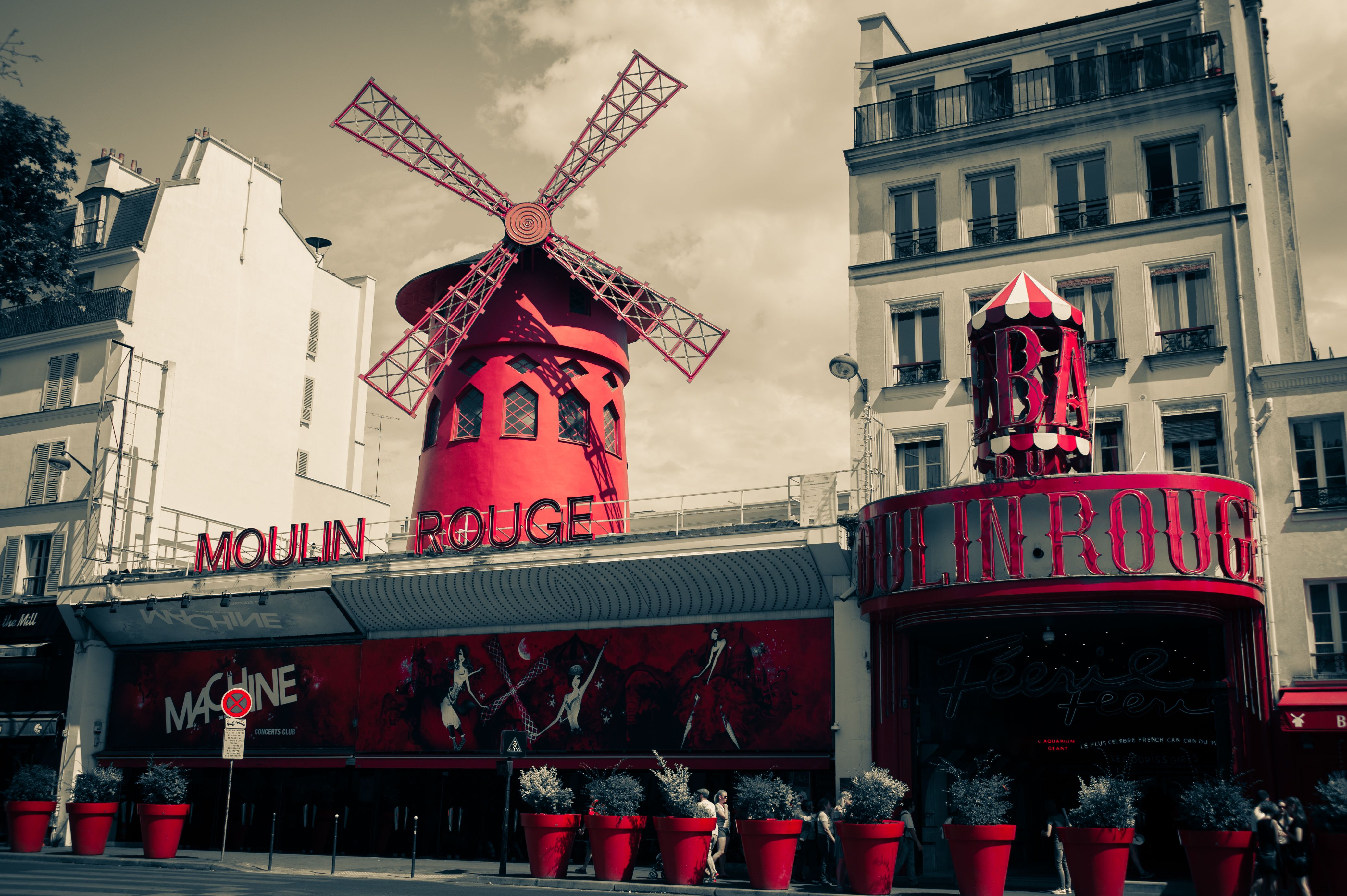
The machinery gets louder in Belle Époque Paris. At the Moulin Rouge, which opened on the boulevard de Clichy in 1889, a former laundress named Louise Weber became the star of the can-can under the stage name La Goulue – “the Glutton,” earned by downing customers’ drinks mid-dance. In 1891 the painter Henri de Toulouse-Lautrec, then twenty-seven, made her the subject of his first poster, a four-colour lithograph printed in roughly three thousand copies and pasted across Paris. It made the dancer and the artist famous overnight. The Metropolitan Museum of Art’s record of the poster describes it as the work that launched Lautrec’s career.
Around La Goulue swirled the women the press called les grandes horizontales: Cora Pearl, the English-born star who published her memoirs in 1886, the year she died; La Belle Otero, the Galician dancer who claimed the patronage of a whole row of European monarchs and then gambled her fortune away in the casinos of the Riviera, dying in Nice in 1965; Liane de Pougy, Folies-Bergère vedette, novelist and, in her last years, a Dominican tertiary. These women licensed postcards of themselves, fed stories to the newspapers and staged public rivalries with one another – Otero and de Pougy competed so theatrically that the papers covered their wardrobes like celebrity gossip. French cultural historians have described them as women who “made their life their work of art.” They were, in effect, the first celebrities in the modern sense, a full half-century before the film studios invented the concept.
Yoshiwara: the oiran as trendsetters
The same logic ran, half a world away, in the licensed quarters of Edo-period Japan. In Yoshiwara, the shogunate-sanctioned district founded in 1617, the highest-ranking courtesans – the oiran – were trained in calligraphy, tea ceremony, poetry, music and even the board game go. A night with the top rank cost the equivalent of ¥130,000 in modern money, and custom held that a client paid three visits of gifts before he was accepted at all. Nippon.com’s history of the quarter records that the whole courtship could run to the equivalent of a million yen before the first night together.
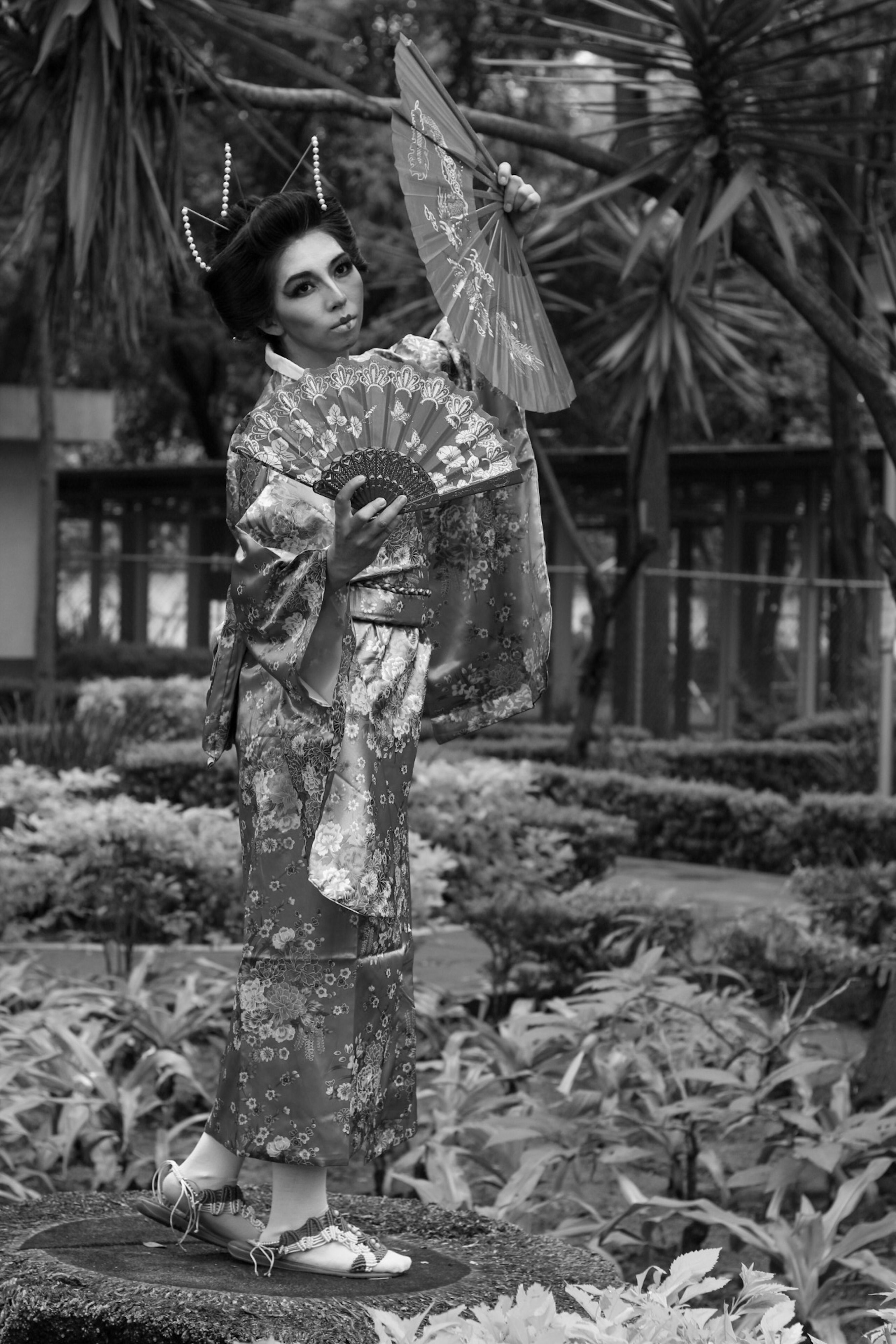
Because their world was walled off from respectable Edo, it became its own sealed universe of fashion – and its most famous residents were the closest thing the city had to style icons. Their layered kimono, their kanzashi hairpins, their way of tying the obi in front (courtesans tied it at the front, geisha at the back; the difference was legally enforced) all set trends that spread far beyond the quarter’s walls. The sharper distinction matters too: geisha are performing artists and always were, not courtesans. The kimono-clad performer pictured above belongs to a tradition that still exists today, while the oiran profession died with the anti-prostitution law that closed Yoshiwara in 1958. What both prove is that a courtesan culture, wherever it flowered, doubled as a school of the arts.
The tawaifs: custodians of a high culture
Take the tawaifs of North India, active from the Mughal era into the nineteenth century. They were not simply entertainers: they were trained from childhood in kathak dance, thumri and ghazal singing and Urdu poetry, and they were regarded as the supreme authorities on etiquette and manners – tehzeeb. Young princes were sent to their kothas, their salons, to be taught refinement and cultured conversation. As an academic study in The International Journal of the Commons puts it, they were “hailed as custodians of culture.”
Their story is the darkest counter-example to everything above, because it shows how fragile icon status is. Under British rule, the anti-nautch movement – a purity campaign led by colonial authorities with Indian middle-class allies – systematically rebranded the tawaifs as prostitutes and drove them from their kothas. When Indian nationalists later “rescued” kathak and thumri for the respectable stage, they rescued the art forms and left the women out of the story. The women vanished from history because the people writing history decided to erase them. Iconhood, in other words, is not a property of the woman. It is a verdict – and verdicts can be reversed.
The myth machine: Duplessis and Mata Hari
Nowhere is the double-edged nature of that verdict clearer than in the case of Marie Duplessis, the Paris courtesan who died of tuberculosis in 1847 at twenty-three. Within a year her former lover Alexandre Dumas fils had turned her into the heroine of La Dame aux Camélias; a play followed in 1852, and Verdi turned that into La Traviata in 1853. One woman, four immortal works – but the woman in the works is not the woman. The Royal Ballet and Opera’s retelling of the story notes that Duplessis achieved her “lasting and universal fame” as Violetta Valéry, a character. Her real life – the peasant childhood in Normandy, the debts, the illness – was refashioned by men who had loved and mourned her into a story about redemption.
Mata Hari went one step further: her iconhood was manufactured by the very state that killed her. Born Margaretha Zelle in the Netherlands in 1876, she reinvented herself in Paris as an exotic dancer – the name, she claimed, meant “eye of the day” in Malay – and her performances made her one of the most famous women in Europe. Arrested in February 1917 on suspicion of spying for Germany, she was tried in secret, convicted and shot at dawn on 15 October 1917 at Vincennes. The French Ministry of Defence’s historical service, which holds her case files, notes that after the war neither the Germans nor the French could demonstrate that she had ever supplied vital information to either side; one historian has called her “a double agent who probably never actually spied.” A request to reopen her case was filed with the French justice minister in 2001 and refused. The femme-fatale spy who walks through every biography was largely built by wartime propaganda that needed a scapegoat. She is remembered, but she was also a prisoner of her own legend.
The tradition that never went away
Strip away the courts and the corsets and a pattern remains, one that never actually disappeared. The market for cultivated, discreet companionship – for someone who can hold a conversation, read a room and protect a reputation – is not a nineteenth-century invention, and it did not die with the Belle Époque. A modern high-end escort service München operates on exactly the same unwritten economics that La Belle Otero monetized: presentation, discretion, status and the quiet sale of attention rather than of need. The names on the postcards change; the profession’s deep structure does not. That continuity is itself part of why the famous courtesans endure – they were the first people to run this particular business as a public brand.
Four traditions, one pattern
The striking thing, reading the four great courtesan cultures side by side, is that in every case the fame rested on training and access rather than on attraction alone.
Tradition
Where & when
What they were trained in
What carried their fame
Greek hetaerae (Phryne, Aspasia)
Athens, 5th–4th c. BC
Conversation, symposium culture; models for Praxiteles and Apelles
Sculpture – the Aphrodite of Knidos; a gilded statue at Delphi
Parisian courtesans (Ninon, Duplessis, La Goulue, Belle Otero)
Paris, 17th–19th c.
Wit, literature, music, stage performance
Salons, memoirs, press coverage, posters, opera
Oiran of Yoshiwara
Edo (Tokyo), 17th–19th c.
Calligraphy, tea ceremony, poetry, shamisen, go
Fashion and trendsetting; the “floating world” of ukiyo-e prints
Tawaifs of North India
Mughal courts, 16th–19th c.
Kathak, thumri, ghazal, Urdu poetry, etiquette
Teaching tehzeeb to princes; custodians of Hindustani music
Compiled from Athenaeus (via the Perseus Digital Library) on Phryne, the Metropolitan Museum of Art on Toulouse-Lautrec’s poster, Nippon.com (April 2022) on the Yoshiwara, and The International Journal of the Commons (2021) on the tawaifs. All checked 26 August 2026.
What actually made them icons
So what separates the courtesans who became cultural icons from the thousands who were forgotten the day their patrons died? The evidence points to a four-part formula. First, education: the icon-status courtesans were trained – in rhetoric, music, poetry, etiquette – and the training was the product. Second, access: they lived inside the circles where culture was made, as salon hostesses, muses and stage stars. Third, control of the image: the memoirs of Cora Pearl, the self-mythologising of La Belle Otero, the posters, the postcards, the press. And fourth, a society that needed them: courts and cities that criminalised the woman while adoring the entertainer.
None of that means we should romanticise the lives themselves. The same records show girls sold into the Yoshiwara, women dying of consumption at twenty-three, a dancer executed for a crime the evidence never supported. The uncomfortable truth is that fame was the one asset that could partly protect a courtesan from her circumstances – and it was an asset over which she rarely had full control.
Beauty, in the end, was the least of it. Nobody can even say what Phryne looked like; the ancient sources never describe her face. What survives is the retelling – the trial, the statue, the opera, the poster. The courtesans who became icons were the ones whose stories other people wanted to keep telling. And that, I would argue, is the real reason we still remember them: they made themselves impossible to stop talking about.
How this article was put together. This piece is based on research carried out on 26 August 2026: Athenaeus’s account of Phryne via the Perseus Digital Library, the Bryn Mawr Classical Review’s 2025 review of Phryne: A Life in Fragments, the Metropolitan Museum of Art’s record of the Toulouse-Lautrec poster, the Royal Ballet and Opera’s history of La traviata, the French Ministry of Defence historical service’s files on Mata Hari, Nippon.com’s history of the Yoshiwara, and academic studies of the tawaifs in The International Journal of the Commons. Anecdotes that rest on legend rather than documentation – Phryne’s courtroom disrobing, the fortune Otero is said to have gambled away – are flagged as such in the text.